Ghibli
Netflix used AI to replace background painters. They called it a solution to the labor shortage they subsidized.
Netflix blamed a 'labor shortage' for its AI backgrounds. Miyazaki called it an 'insult to life.' We catalog the fails of the automated Ghibli aesthetic.
For decades, Studio Ghibli has served as the gold standard for the "soul" of animation, a sanctuary of hand-drawn watercolor landscapes and meticulous traditional craft. When audiences watch the rustling grass in My Neighbor Totoro or the shimmering bathhouse in Spirited Away, they are not just consuming content; they are witnessing the cumulative labor of thousands of human painters. However, in recent years, a new narrative has emerged from the boardrooms of global streaming giants: the idea that this level of craft is no longer sustainable due to a "labor shortage." This corporate framing suggests that the only way to preserve the Ghibli aesthetic is to automate it.
The adoption of generative AI to mimic the Studio Ghibli aesthetic is driven by a desire to decouple visual identity from human labor costs, using the narrative of a 'labor shortage' to bypass the financial obligations of traditional animation craft. This analytical framework reveals that what is often presented as a technical necessity is, in fact, an economic strategy designed to maintain high production volumes while suppressing the wages of the very artists whose work defines the medium's value. By examining the recent history of AI-generated anime, from experimental shorts to viral legal scandals, we can document a consistent pattern of cost-avoidance masquerading as innovation.
1. Netflix Japan Credits the Machine Over the Human
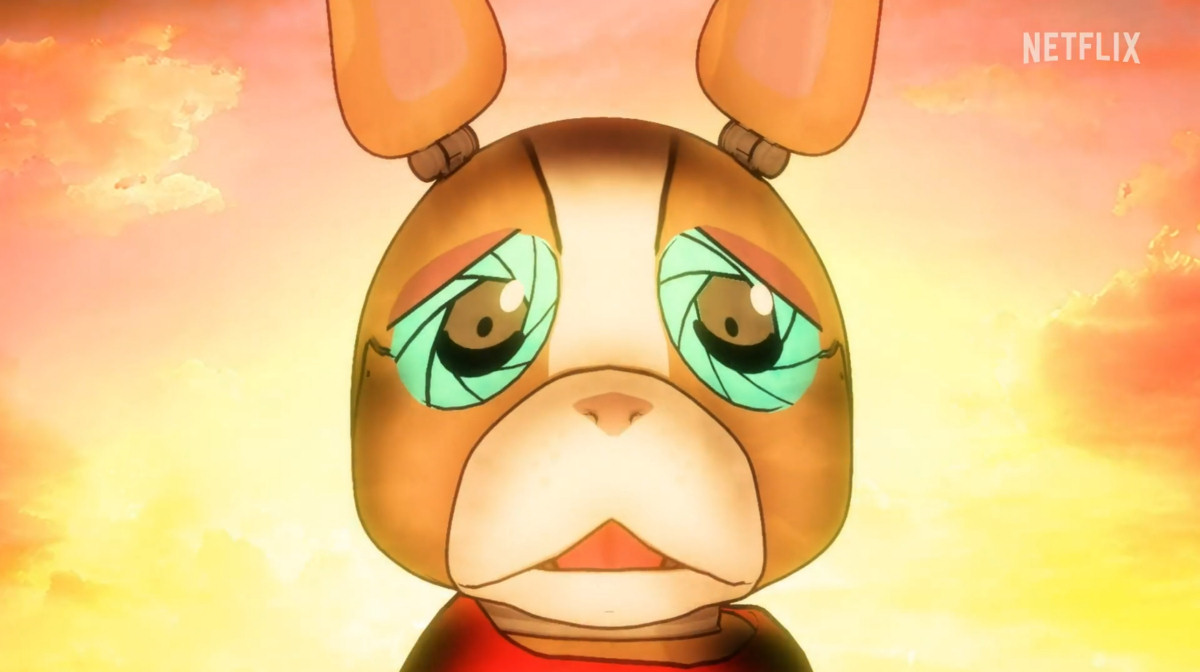
The setup: In early 2023, Netflix Japan and WIT Studio decided to tackle the grueling work of background painting for a three-minute short film titled The Dog & The Boy. The punchline: They credited the background artist as "AI (plus Human)," a move that suggested the machine was the primary creative force and the person was merely a janitor for the algorithm's hallucinations. This reversal of professional hierarchy sent a clear message to the labor market about who the studio considered the "lead" creative.
According to a report by The Verge, Netflix Japan defended the move on social media, claiming it was an "experimental effort to help the anime industry, which has a labor shortage." This claim was immediately met with skepticism by industry observers who noted that the "shortage" is not a lack of available talent, but a lack of talent willing to work for the starvation wages common in the sector. The resulting art in the short film displayed the classic "uncanny valley" of generative models—surfaces that looked like watercolor from a distance but dissolved into sterile smears upon closer inspection.
The use of AI in this context represents the first major attempt to normalize Style Theft, a term we define as the process of training AI models on an artist's signature visual language without consent. By citing a "labor shortage," Netflix effectively subsidized the removal of entry-level painting roles. As noted by Anime News Network, these are the very positions that allow new artists to enter the industry and eventually become the masters they claim to be lacking.
The credit line in 'The Dog & The Boy' listed 'Human' as a secondary support to 'AI,' a reversal of the traditional relationship between artist and tool that signals a shift in how studios value human expertise Engadget.
2. The Ghibli Legal Threat That Never Was
By March 2025, the attempt to commercialize the Ghibli "vibe" had moved from experimental shorts to dedicated software platforms. A service known as Gib Studio launched with the explicit promise of "Style as a Service," offering users the ability to generate Ghibli-esque assets with a few keystrokes. This was made possible through the use of LoRA (Low-Rank Adaptation).
As defined by technical communities on Civitai, a LoRA (Low-Rank Adaptation) is a technical method used to fine-tune large generative AI models on a specific set of images to reproduce a particular artistic style or character without retraining the entire model. In simpler terms, it is a way to distill sixty years of Ghibli's hand-drawn history into a 140MB file that can be downloaded for free. This allows users to generate thousands of derivative images that mimic the specific watercolor textures of Ghibli's background painters.
The controversy peaked when a viral "cease and desist" letter began circulating online, allegedly sent from Studio Ghibli's legal team to the creators of Gib Studio. The internet erupted in cheers, hoping the legendary studio would finally draw a line in the sand. However, as documented by Otakukart, the letter was a forgery. Studio Ghibli was forced to issue a rare clarification through NHK, stating that while they had not sent that specific legal threat, they remained committed to their traditional methods.
The tragedy of this incident is not just the forgery, but the "legal limbo" it highlighted. Under current frameworks, an artistic "style" is not protected by copyright in the same way a specific character like Totoro is. This allows platforms like Gib Studio to operate in a gray area, where they can profit from the "cozy" aesthetic of Ghibli without ever paying a yen to the estate or the artists who built that visual language.
3. Miyazaki's Worst Nightmare Hits 10,000 Downloads
The setup: Hayao Miyazaki, the co-founder of Studio Ghibli, is famously averse to computers. The punchline: There are currently over 10,000 downloads for the top Ghibli-style LoRA models on Civitai, allowing anyone with a GPU to churn out "Miyazaki-esque" slop at a rate of sixty frames per minute. This industrial-scale replication is the antithesis of the studio's slow, deliberate production philosophy.
In a 2016 NHK documentary titled The Man Who Is Not Finished: Hayao Miyazaki, the director was shown an AI demo of a creature that moved in a grotesque, unnatural way. His response has since become the rallying cry for the anti-AI movement: "I am utterly disgusted... I strongly feel that this is an insult to life itself." Miyazaki’s objection wasn’t just about the aesthetics; it was about the lack of empathy. To him, every stroke of a background painter is an act of observing the real world. AI, conversely, observes only the data.
Despite this, the "Civitai factory" continues to expand. These models allow users to bypass the "labor" of learning an aesthetic, which is precisely why they are so popular. When a YouTuber creates a "Harry Potter in the style of Studio Ghibli" trailer using these tools, they aren't paying homage to Miyazaki's craft. They are using a LoRA to perform a skin-graft—taking the surface-level beauty of a Ghibli film and stretching it over a generic, prompt-based structure.
The proliferation of these models documented on Civitai confirms our thesis: the goal is to decouple the visual identity (the "look") from the human cost. The machine doesn't need to understand the wind; it just needs to know which pixels are usually green when the prompt says "Ghibli forest." This efficiency comes at the cost of the very "soul" that made the style valuable to begin with.
4. The Corporate Shield of the Aging Population
It is important to represent the opposing viewpoint fairly. Defenders of AI backgrounds, including some production managers in Tokyo, argue that technology is the only way to meet the global demand for anime volume given the aging population and declining birth rates in Japan. They point to the 2024 problem in Japanese logistics and similar labor crunches in other sectors as evidence that there simply aren't enough young people to paint every blade of grass by hand anymore.
However, when we look at the receipts, this defense falls apart. Industry reports from organizations like JAniCA, cited in a comprehensive analysis by Vice, show that the 'shortage' is primarily of experienced lead animators and directors, not entry-level talent. Young artists are being driven out of the industry by stagnant wages—wages that AI investments further suppress. The entry-level pay for some animators remains near $200 per month, a figure that makes living in Tokyo impossible without external support.
| Claim | Evidence-Based Counter-Claim | Source |
|---|---|---|
| AI is a response to a natural labor shortage. | The shortage is a result of unsustainable pay (approx. $200/month for some starters). | Vice |
| AI tools help artists work faster. | AI tools are being used to replace artists entirely in the credits. | Engadget |
| Digital automation is the only way forward. | Traditional studios like Ghibli remain profitable through high-quality, slow-burn releases. | Otakukart |
The "demographic crisis" is a convenient corporate shield. If a studio cannot find enough painters, the logical economic response in a free market is to raise wages to attract more workers. Instead, Netflix and its partners have chosen to invest in generative models that allow them to keep wages low by making the human element "optional." This strategy treats the artistic heritage of Ghibli not as a living craft, but as a harvestable resource.
5. Corridor Digital and the Skin-Grafting of Soul
The final stage of this process is what we might call the "Cozy-Wash." AI excels at recreating the "messy" intentionality of hand-drawn art in a way that feels sterile. Because the models are trained on static frames, they struggle with the life that Miyazaki breathes into his worlds. The result is a specific type of failure: backgrounds that are technically complex but emotionally vacant.
We have logged several related incidents, including Corridor Digital's Anime Rock-Paper-Scissors (2023). This project used Stable Diffusion to stylize live-action footage into a generic anime aesthetic. As reported by The Verge, the project drew heavy criticism for Style Theft and the use of the Vampire Hunter D aesthetic without permission. This was another example of "skin-grafting," where a historical style was used to cover for a lack of original visual direction.
As noted in a debate on Opentools, the controversy isn't just about pixels; it's about the "commodification of intent." When a human paints a background, they decide where the light hits because they want the viewer to feel a certain warmth. When a LoRA generates a background, it places light where the training data says light usually goes. This decoupling of visual identity from human labor costs is the ultimate goal of the "labor shortage" narrative.
6. Economic Avoidance as Technical Innovation
The evidence presented supports the thesis that the adoption of generative AI in the style of Studio Ghibli is an economic choice driven by cost-avoidance rather than a technical necessity. From Netflix's initial experiments to the proliferation of LoRAs on Civitai, the trajectory is clear: the industry is attempting to bypass the financial obligations of traditional animation craft by rebranding wage suppression as a solution to a "shortage." While the AI-generated outputs are technically capable in static screenshots, they fail as a production solution because they contradict the very philosophy of the source material they mimic.
Studio Ghibli’s success is built on the fact that their art is not easy to produce. By attempting to make it "easy" through automation, studios like Netflix are not just replacing painters; they are diluting the brand value of the aesthetic they claim to admire. The Ghibli "look" is inseparable from the Ghibli "work." When you remove the work, you are left with a hollow imitation that the audience eventually recognizes as a cost-cutting measure.
The "labor shortage" in anime is a documented reality, but it is a crisis of the industry's own making. Until studios address the underlying issues of pay and working conditions highlighted by Vice, AI will remain a tool for avoiding workers rather than empowering them. The Ghibli style is a testament to what humans can do when they are given the time and resources to care. Removing the "care" via an algorithm doesn't solve the shortage; it just automates the decline of the medium.