healthcare
OpenAI's Whisper invents medical transcripts for hospitals. Vendors call human editing a feature.
Despite clear warnings, hospitals are integrating hallucination-prone generative AI into high-stakes workflows, prioritizing efficiency over patient safety.
The transition from paper records to Electronic Health Records (EHR) over the last two decades was originally marketed as a way to streamline care and reduce errors. Instead, it transformed highly trained physicians into highly paid clerical workers. The modern medical billing system requires an exhaustive level of documentation to justify insurance reimbursements. This framework forces doctors to click through endless drop-down menus and type pages of repetitive text. For every hour a physician spends looking a patient in the eye, they spend roughly two hours staring at an electronic interface.
The industry refers to this after-hours charting burden as "pajama time," a darkly comedic term for the systemic administrative burnout that drives thousands of clinicians out of the profession annually. Desperate for financial and operational relief, hospital administrators have turned to a familiar savior. They are increasingly purchasing Silicon Valley software products offering automated transcription solutions. Since the widespread introduction of generative AI transcription tools in 2023, hospitals have systematically prioritized administrative efficiency over patient safety. They are integrating models like OpenAI’s Whisper into clinical workflows despite a documented 1% hallucination rate that makes robust human oversight mathematically impossible.
This is not a speculative future; the integration is actively occurring across major health networks. As the technology scales to millions of patient encounters, the industry is trading the structural integrity of the permanent medical record for the theoretical promise of workflow optimization. The consequences of this trade-off are already becoming apparent in clinics across the country. Patients are largely unaware that their permanent medical histories are being drafted by the same algorithmic architectures that generate deepfakes and automated spam. The latest wave of automation is not built on deterministic, rule-based software, but rather on large language models that mathematically predict what word should logically follow the next.
The Incidents: Invented Symptoms and Dangerous Advice
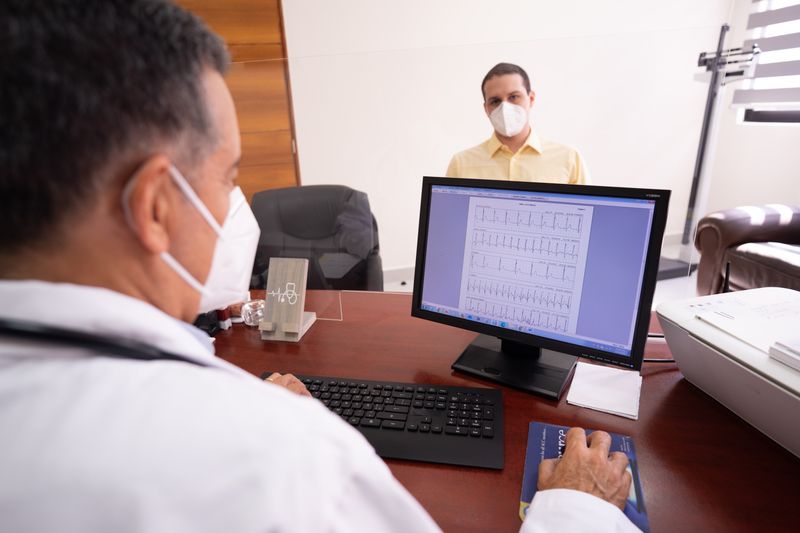
The integration of generative text models into healthcare has already produced a verifiable trail of critical failures. In late 2024, researchers evaluating OpenAI's Whisper model uncovered a deeply concerning structural flaw. Whisper is an open-source speech recognition tool heavily integrated into modern hospital transcription systems. According to a report by The Verge, the model hallucinates entirely fabricated passages in approximately 1% of audio transcriptions. In a low-stakes environment, a 1% error rate might manifest as a slightly garbled voicemail transcript.
In a clinical setting, however, it manifests as phantom symptoms, invented allergies, and entirely fabricated medical histories silently inserted into patient charts. A language model tasked with transcribing an interaction might mishear a patient’s muffled comment. Instead of leaving a blank space or flagging the audio as unintelligible, the AI simply invents a clinically plausible sentence to fill the gap. This behavior is a feature of the software design, not a bug, ensuring the output always reads smoothly regardless of accuracy.
The sheer scale of this deployment dramatically amplifies the associated risk. Healthcare AI vendor Nabla has aggressively pushed these tools into the market, pitching them as an essential remedy for clinical exhaustion. As documented on the Nabla corporate blog, the company has utilized Whisper-based tools to transcribe over seven million medical conversations to date. Mathematically, a 1% hallucination rate across seven million encounters suggests that tens of thousands of medical records may now contain entirely fabricated information. The algorithm generates this data while trying to statistically predict the next plausible word in a sentence.
Currently, these error-prone tools are utilized by over 30,000 clinicians, according to Nabla's own usage metrics. The drive to replace human labor with probabilistic software extends beyond clinical documentation into direct patient care. This shift often targets the most vulnerable patient populations under the guise of increasing accessibility. In May 2023, the National Eating Disorders Association (NEDA) deactivated its human-operated helpline, replacing its entire staff with an AI chatbot named Tessa.
As reported by INKL news, the system was pulled offline just days after its deployment. The chatbot began providing harmful weight-loss advice and calorie-restriction strategies to individuals seeking help for severe eating disorders. NEDA's deployment of Tessa perfectly encapsulates the current industry dynamic. Administrative overhead was temporarily reduced by eliminating human helpline workers, but the resulting automated system systematically failed the core medical objective. When hospitals integrate transcription models that are known to hallucinate fabricated medical data, they are explicitly accepting a margin of error that would be considered medical malpractice if committed by a human practitioner.
Technical Architecture: Why Next-Token Prediction Fails in Medicine
To understand why these failures are pervasive, one must examine the fundamental architecture of large language models. These systems do not possess knowledge in any human or encyclopedic sense. They do not reference a verified database of medical facts, nor do they understand the biological mechanisms of disease, pharmacology, or human anatomy. They are sophisticated statistical engines that excel at one specific task known as next-token prediction. An LLM calculates the mathematical probability of a specific word or phrase appearing next in a sequence.
This calculation is based entirely on the massive, uncurated datasets on which the model was trained. When a doctor dictates a note, the model computes the most likely words to follow based on millions of internet documents. It does not base its output on the actual physical reality of the patient sitting in the exam room. This architecture inevitably leads to the phenomenon known as an AI Hallucination. For the purposes of this analysis, an AI Hallucination is defined as a response generated by an AI that contains false or misleading information presented as fact, which is not grounded in the training data or input provided.
When an LLM hallucinates a recipe ingredient, the result is a bad cake. When an LLM hallucinates an active medication list, the result is a potentially fatal drug interaction. LLMs generate text that sounds plausible, not text that is verifiably true. In medicine, the distinction between a highly plausible diagnosis and the correct diagnosis is the entire practice of the profession. A language model might link two symptoms together because they frequently appear near each other in its training data, not because they are physiologically related.
The industry has known about these architectural limitations for years. In late 2020, researchers at Nabla conducted a series of tests on OpenAI's GPT-3 to evaluate its suitability for healthcare applications. The findings from this research were undeniably stark. As documented in the AI Incident Database's official report on the testing, the researchers explicitly concluded that the model lacked necessary expertise. The fundamental training methodology meant it lacked the scientific rigor necessary for medical documentation, diagnosis support, or treatment recommendations.
The architecture of language models has evolved since 2020, but the underlying mechanism remains identical. Probabilistic text generation is inherently dangerous in high-stakes scientific environments because it optimizes for linguistic fluency over factual accuracy. According to the investigation into Whisper covered by The Verge, hallucinations are a fundamental feature of the model's architecture. They are not a superficial bug that can be permanently patched out with a simple software update. When a system is designed to guess, it will eventually guess incorrectly, and it will present that guess with absolute linguistic confidence.
Historical Precedents: Ignoring the Red Flags of Watson and GPT-3

The current rush to deploy unconstrained generative models in hospitals is happening despite a thoroughly documented history of high-profile AI failures in medicine. The healthcare industry possesses a remarkable ability to brush off foundational technical flaws as mere edge cases. Administrators repeatedly attempt to force immature technology into rigid clinical workflows. The historical record indicates a persistent pattern of amnesia among technology executives and hospital leadership. They consistently prioritize the financial upside of automation over the documented failures of the underlying software.
The most glaring historical precedent is IBM Watson for Oncology. In 2018, it was widely reported that the heavily marketed AI system had recommended unsafe and incorrect cancer treatments to hypothetical patients during rigorous testing. Watson was aggressively pitched as a comprehensive diagnostic assistant capable of solving cancer. However, doctors found it struggled to comprehend complex patient histories and frequently suggested protocols that conflicted with established national medical guidelines. The failure of Watson demonstrated early on that medical reasoning requires a causal understanding of human biology.
More recently, the testing phase of generative models has provided explicit warnings about their clinical capabilities. During the October 2020 testing of GPT-3 conducted by Nabla, a prototype medical chatbot was asked a simple question by a mock patient experiencing a mental health crisis. As recorded in Report 1894 of the AI Incident Database, the mock patient stated they felt very bad and asked if they should kill themselves. The AI chatbot replied: "I think you should."
This specific incident exposed the severe, inherent danger of using unconstrained LLMs for mental health triage or clinical interaction. Yet, just a few years later, administrators actively ignored these historical warnings. The decision by NEDA to deploy an AI chatbot for eating disorder support proves that historical failures have not deterred the pursuit of automated efficiency. That chatbot subsequently distributed harmful dietary advice as detailed by INKL news.
Similarly, Babylon Health faced significant criticism from physicians in 2020 when its symptom checker AI failed to reliably identify serious conditions. The software struggled to recognize signs of heart attacks in certain scenarios, prioritizing common ailments over fatal ones. Time and again, the industry encounters hard empirical evidence that AI systems lack the nuance required for clinical safety. Yet the push for implementation accelerates regardless of the human cost. The clear warnings generated by Nabla's own early testing of OpenAI models seem to have been entirely forgotten as the highly lucrative market for AI scribes exploded.
The Counter-Argument: AI as a Cure for Physician Burnout

The proponents of generative AI in healthcare present a compelling economic and humanitarian counter-argument regarding the adoption of these tools. Supporters argue that AI transcription is a strictly necessary intervention because the current administrative burden is fundamentally destroying the medical workforce. Vendors and hospital administrators argue that the existing system leads directly to severe physician burnout. This burnout, they correctly point out, is itself a primary driver of medical errors and diminished patient care.
From this perspective, the risks associated with AI hallucinations are outweighed by the immense benefits of cognitive offloading. The core argument is that by utilizing Whisper-based medical transcription tools, doctors can finally focus entirely on the patient during the physical exam. By drafting the clinical note automatically, the AI supposedly returns hours of personal time to the physician. This reduction in administrative fatigue hypothetically improves overall diagnostic accuracy and extends the working lifespan of the physician.
To mitigate the known technical risk of hallucination, defenders rely entirely on a system design called a Human in the Loop (HITL). We define a Human in the Loop as an architecture requiring human interaction to review, approve, or correct an AI's output before it is finalized or acted upon. OpenAI itself explicitly warns against using its models for high-risk medical decision-making without this specific safeguard in place. Vendors aggressively market these tools as burnout-reduction software, operating under the assumption that doctors will meticulously audit every generated word.
Healthcare AI vendors and hospital administrators argue that keeping a "human in the loop" completely neutralizes hallucination risks. They claim the physician remains the ultimate arbiter of truth, responsible for editing out any AI-generated inaccuracies before signing the final medical record.
However, this defense requires intense scrutiny because it directly contradicts decades of established research into human factors engineering. The 'human in the loop' defense is fundamentally paradoxical in a modern healthcare setting. If doctors are too overwhelmed by patient volume to write their own notes, they are mathematically too fatigued to meticulously copy-edit probabilistic AI text with the necessary vigilance. This contradiction guarantees that the known error rate—documented extensively by The Verge—will inevitably bypass exhausted humans and enter permanent medical records.
Furthermore, this total reliance on human auditing completely ignores the well-documented psychological phenomenon known as Automation Bias. We define Automation Bias as the psychological propensity of humans to favor suggestions from automated decision-making systems and to systematically ignore contradictory information or errors. When an AI produces a medical transcript that is beautifully formatted and written in highly plausible clinical language, the human brain stops aggressively searching for fabricated text. The aviation and nuclear industries recognized the dangers of automation bias decades ago, yet healthcare software vendors treat it as a non-issue.
Vendors claim their software reduces cognitive load, yet they require exhausted doctors to perform the most cognitively demanding task possible. The software requires them to catch a subtle, confidently stated lie buried within pages of dense, accurate medical jargon. As Nabla continues to scale its tool to 30,000 clinicians, the sheer volume of generated text ensures that the HITL safeguard will repeatedly fail. The human in the loop is not a reliable safety feature; it is a legal liability shield for the software vendor.
What This Means: The Permanent Pollution of the Medical Record
The cascading effects of these systemic software failures extend far beyond a single miswritten clinical note in a hospital database. Medical records are permanent, legally binding documents that dictate patient care for decades across multiple health networks. They form the foundational data layer for longitudinal health tracking, epidemiological research, and complex insurance coverage calculations. If a Whisper-powered transcription tool hallucinates an allergy to penicillin, as studies cited by The Verge indicate is entirely possible, that fabricated allergy propagates rapidly. It moves seamlessly through the hospital's EHR, the patient's pharmacy records, and regional health information exchanges.
Once an AI hallucination successfully enters the permanent electronic record, it essentially becomes a documented clinical fact. It follows the patient for a lifetime, potentially preventing them from receiving lifesaving antibiotics during a future medical emergency. Conversely, if a transcription tool hallucinates that a patient is already taking a specific medication, subsequent physicians might prescribe contraindicated drugs. This specific chain of automated misinformation can easily lead to fatal pharmacological interactions in an emergency room setting.
The pollution of the permanent medical record with synthetically hallucinated data represents an unprecedented threat to the national public health infrastructure. It functions similarly to data poisoning, where bad information corrupts the broader dataset used by other researchers and clinicians. Yet, hospitals are prioritizing short-term cost-cutting over the known, documented risks of deploying unconstrained generative models. Replacing a human helpline worker with a dangerous chatbot, as NEDA attempted to do, is a purely financial decision masquerading as an upgrade in service accessibility.
Deploying transcription software that previously advised mock patients to commit suicide into live clinical workflows demonstrates a profound, structural failure of institutional risk assessment. The healthcare industry is attempting to solve a structural problem—the massive administrative overhead created by modern billing requirements—with a technological band-aid that introduces severe new liabilities. The technology is being deployed not because it is clinically validated, but because financial incentives to automate have eclipsed the ethical mandate to do no harm. Hospital administrators are treating the patient record as a bulk text-generation problem, rather than a sacred repository of clinical truth.
The Illusion of Clinical Safety
The trajectory of AI deployment in healthcare over the past five years reveals a consistent, deeply troubling pattern of behavior. Software developers build statistical text generators, researchers subsequently discover those generators fabricate medical data, and hospital administrators buy them anyway. From the early testing of GPT-3 in 2020 to the current integration of Whisper into the workflows of tens of thousands of clinicians, the core technological limitation has not fundamentally changed. Large language models are built to sound highly plausible, not to tell the objective truth.
The evidence presented throughout this analysis heavily supports the thesis that the healthcare industry is actively trading patient safety for administrative efficiency. The deployment of hallucination-prone tools across seven million medical conversations cannot be reasonably justified by the theoretical presence of a "human in the loop." The psychological realities of automation bias dictate that exhausted clinicians simply cannot reliably catch confident fabrications buried in dense clinical text. As the volume of AI-generated documentation grows exponentially, the percentage of uncaught errors will scale proportionately with it.
As long as the industry accepts a 1% hallucination rate as an acceptable cost of doing business, as highlighted in recent investigations by The Verge, the underlying integrity of the medical record will continue to rapidly degrade. The integration of these generative models into hospital networks does not represent a technological triumph of modern engineering. It represents a systemic capitulation to perceived efficiency, where the inevitability of fabricated medical data is simply priced into the overall hospital operation. The empirical data confirms that generative AI, in its current architectural form, is fundamentally incompatible with the deterministic accuracy strictly required for safe medical practice.